Silicon Dreams

(This was originally released as Implausipod Episode 26, on February 4, 2024)

https://www.implausipod.com/1935232/episodes/14428351-implausipod-e0026-silicon-dreams

Silicon Dreams are those glittering visions of mythic intensity that inspire the continued development of revolutionary technologies. Listen to this episode of the Implausipod to learn more about where they come from, and how the mythic imagination has been behind the development of virtual reality, artificial intelligence, and other tech innovations.


When Neuromancer appeared, it was picked up and devoured by hundreds, then thousands, of men and women who worked in or around the garages and cubicles, where what is still called new media were, fitfully, being birthed. Thousands who, on reading his description of cyberspace, thought to themselves, That’s so freaking cool!

And set about searching for any way the gold of imagination might be transmuted into silicon reality. End quote. This is by Jack Womack in the 2004 introduction to the 20th anniversary version of Neuromancer. And this episode of The Implausipod is about those silicon dreams.

Welcome to The Implausipod, a podcast about the intersection of art, technology, and popular culture. I’m your host, Dr. Implausible. And as we ease into 2024, we seem to be living at that intersection, as the technologies of sci fi past are being shown off every week, with new products and instruments of echanger like automation, robotics, and artificial intelligence being brought to market, and older technologies like 3D printing and drones being so commonplace that you can find them at a Costco or Target.

But this process isn’t anything new. It’s been happening for at least 35 or 40 years. And when I first began researching it, almost 20 years ago, back in 2005, I had a hunch that I might be onto something, but reality is far outpaced even my wildest imagination. And that imagination is what this episode is about, the mythic imagination that inspires the development of new technologies, whether it comes from science fiction or fantasy or other sources as well. 

So for this episode, I’ll take you back to that initial hunch and how it led me to track down the sources of those myths and what impact they had on the creation of the digital sublime and how that has impacted our current reality as well.

And with the incipient release of the Apple Vision Pro, their forthcoming AR VR headset, or whatever their marketing department is describing it as, this hunch couldn’t be more timely because my early work was on the development of virtual reality. 

Now, the hunch came about reading something else unrelated.

It was Ray Kurzweil’s work on the singularity that came out in the early 2000s. And I noted how much the work was influenced by or influenced upon, basically co creative, of the works of science fiction that were coming up in those prior 20 years. And it seemed to me that there had to be a lot of overlap between science fiction and science and the development of these new technologies.

But at the time, the literature wasn’t there yet. There was a few authors that had worked on it, notably William Bainbridge, who took a look at the early influences on the development of the space program in his 1976 book, The Spaceflight Revolution. Now, this was a sociological review of it. So he was looking at science and engineering at NASA and elsewhere through that sociological lens.

And in so doing, you noted how a revolutionary technology, like spaceflight, came around mostly theoretically before it was even attempted practically. And that theoretical drive was often influenced by, you know, the visions. In this case, we’ll go back to the mythic visions, that can be influenced by, in this case, fiction.

I mean, visionaries had long thought about traveling to the moon long before science fiction was even a genre, for everything with Jules Verne’s From Earth to the Moon from 1865 all the way up to Georges Méliès A Trip to the Moon, the 1902 short film with the bullet in the eye that we all probably famously remember.

So the idea was definitely there, but the technology wasn’t ready and the science wasn’t necessarily sure either. So this is what all made it a revolutionary idea in what we might call Kuhnian terms. They needed a goal, a target, a vision of what to work towards collectively across different countries and different cultures and different political systems.

They were all still kind of building towards this shared collective vision of getting to the moon in this case as the objective. And this holds true for other technologies as well. In the 40 year retrospective on the original publication of his work titled The Spaceflight Revolution Revisited, Bainbridge notes that we’re seeing something similar with the development of the singularity, referencing Kurzweil explicitly, and that that drew from influences going back to the 50s with Arthur C. Clarke’s novel The City and the Stars. 

And we can see that thread connecting all the way through to 2023 with the developments of ChatGPT and OpenAI. So, a 70 year development timeframe from inception to manifestation to when something actually comes about and is brought forth into reality. And did we see similar timeframes with the development of rocketry from inception to landing on the moon?

Yeah. And are we seeing similar lengths with even current technologies like, again, VR or direct neural implants with Neuralink recently being in the news? And again, the answer is yes, anywhere from 40, 50, 60 years from inception to something being made manifest in the world. Now, there can be reasons for this.

Often, it can be tricky, but what drives that development over that long of a time frame? What keeps us going towards the realization of those dreams of something that will necessarily outlive those originally imagined it? And perhaps several other generations following, but still working towards that idea, that realization.

And the answer is a cultural one. This is where the role of myth comes in.

When we hear the word myth, particular associations often come to mind. We can think of mythic heroes from ages of legend, like Heracles and Thor, Zeus and Odin, and the modern retellings of those, whether they’re showing up as superheroes in Marvel and DC movies, or cartoon characters like Bugs Bunny being a stand in for Anansi or Coyote.

In fact, comic book literature as a whole is filled with the retelling of myths and legends, but also we can see it in our political discourse as well, with myths about the foundation of a country, like those in the United States, with the myth of the Promised Land, or the Founding Fathers, or Pocahontas, or any of a number of other things.

Usually you can tell by whether they’ve shown up in a Disney movie or something. And I’m not harshing specifically on Disney here, at least not for this. The idea is that these myths are the tales that we share, that we share collectively. They’re part of our common cultural understanding. And we’re gonna call this, for lack of a better term, the mythic dimension.

And this is where some of our ideas come from. And these can be ideas about how we shape our culture, how our political system is supposed to work. We’ve talked previously about the social imaginary, way back in episode 9, and this kind of continues on with that thread, or streams, we’ll kind of start changing our metaphor mid stream, for reasons to be explained next episode.

But the point being is that our innovations come from new ideas, whether that’s social innovations, political innovations, cultural, and technological, and when it’s technological innovations, they often come from elements of culture that deal with technology. In this case, science fiction. Now, that isn’t the only source and only pathway for new ideas, of course.

As Henry Petroski has mentioned, human wants have long outpaced human needs as a driver of new inventions. But when we’re talking about revolutionary ideas, radical innovations, stuff that’s new to the world, then it can be one of those primary sources. And as stated, it’s one of those things that can kind of keep the vision and drive going from generation to generation to generation.

And as an expression of our culture, literature has an important role in maintaining this drive. And in the 20th and 21st centuries, we’ve had an explosion of other cultural artifacts like film, television, photography, gaming, and the rest, and these all have a role too, but literature is going to be our primary focus.

And the role that literature takes is that of an exemplar. It points forward towards a daring imaginative goal that may not be achievable, but at least gives those who may be in a position to enact change something to aim for. As Northrop Frye notes, “the written word recreates the past in the present and gives us not the familiar remembered thing, but the glittering intensity of the summoned up hallucination.”

This is from 1981. And it’s in this role that fiction finds itself as a part of literature, as a creator of the prophecies that contradict the conventional wisdom. It allows us to take all these opportunities and use them to drive towards the future. And building on what Northrop Frye said, the Canadian author John Ralston Saul elaborates, he says: “Fiction often reveals to us a greater understanding of our own society as it functions today.”

In other words, great fiction can be true for its time, as well as somehow timeless and true for our time. So this is the role that fiction plays, providing a goal, something timeless and transcendent and intense, something that we can work towards as if it was a dream. And this is what brings us to the development of these new and emerging technologies.

And I do want to stress that we’re looking at multiple technologies here. It isn’t restricted to just one thing. As Canadian academic Vincent Mosco pointed out in his book The Digital Sublime, there’s been similar cycles of mythic inspiration for previous radical technologies like the telegraph, electricity, radio, and television.

And as we noted in our Postcard from Earth episode, this can apply to cinema as well, what Andre Bazin was talking about with regard to the myth of total cinema. What these all link back to is what Perry Miller calls the idea of a technological sublime. An American historian of technology, David E. Nye, goes further into the exploration of this in his own work.

What the technological sublime is is that mythic feeling that we feel when we encounter new technology, the one that strikes right through to our emotions. And it doesn’t necessarily have to be anything electronic, it can be something like witnessing the Hoover Dam, or the first experience of air travel.

But honestly, indoor plumbing, refrigeration, and light switches can all conjure that experience as well, especially if you’ve never experienced it before. To return to Arthur C. Clarke, who we mentioned earlier, that old adage that sufficiently advanced technology is indistinguishable from magic holds true, and this is how we have to understand the enduring appeal and pursuit in development of a new technology, VR.

As the Apple Vision Pro launches, there’s no killer app for it. The business case for it is limited and tenuous at best. The use seems forced, often within the Apple ecosystem, and we don’t know what the enduring appeal of it is. Now, it may be that its time has finally come, with other developers like Meta and Valve both producing products within that market.

And this may create enough interest in it for not just a standard to emerge, but also user demand to match up with the available supply. And this is largely the challenge, to make reality match our dreams. Now, the myths of VR largely come from science fiction within the 70s and 80s, so there was contemporaneous development within the technological sphere as well.

Now, there are authors who have gone into great depths about the history of VR, circa 1990. I’d refer the audience to both Howard Rheingold’s Virtual Reality and Michael Heim’s The Metaphysics of Virtual Reality from 91 and 93, respectively. But when it comes to cultural representations, there have been versions of virtual reality going back for decades.

In 1973, there was a short film version of the Ray Bradbury short story The Veldt. which was originally written in 1950. It was marketed as educational programming, and so the contents of that were burned into my brain when it was shown at school. It took my little eight year old brain a little while to understand what those lines were eating in the final frames of that one.

And you can follow a stream through from that one to their first appearance at the Holodeck on Star Trek The Next Generation in 1988, and then every subsequent appearance thereof. And somewhere in between we had the original Tron from Disney. But the visual representations were few and far between. The main source of representations of virtual reality was science fiction.

While we had early versions of computer use, like John Brunner’s Shockwave Rider from 1975, which would still be recognizable to a modern audience, but with its gated communities, urban decay, and computer viruses and identity theft, the first major representation of virtual would be Vernor Vinge’s True Names from 1981.

Now, both Shockwave Rider and True Names had something in common, that they were gobbled up by the people working in computer engineering at the time. Whether it was on campus or within specific firms, the reports are that both those titles were ones that were held in high regard by computing enthusiasts in the 70s and early part of the 80s.

As Katie Hafner and Michael Lyon note in their book Where the Wizards Stay Up Late, “Bruner became a cult figure as the book swept through the worldwide community of science fiction readers. It had a strong influence on an emerging American computer underground, a loose affiliation of phone freaks, computer hackers in places like Silicon Valley and Cambridge, who appeared simultaneously with the development of the personal computer.”

And six years later, this was still going on when True Names was published. As James Frenkel notes, quote, “When True Names was written, it was considered visionary, and was read by some of those who have had a great deal to do with shaping the internet to date.” And while I admit that his mention is problematic now, writing in the afterword to True Names, Marvin Minsky, the co founder of MIT’s Artificial Intelligence Lab, writes, and I quote, 

“In real life, You often have to deal with things you don’t completely understand. You drive a car, not knowing how its engine works. You ride as passenger in someone else’s car, not knowing how that driver works. And strangest of all, you sometimes drive yourself to work, not knowing how you work yourself. To me, the import of True Names, that it is about how we cope with things we don’t understand.

But, how do we ever understand anything in the first place? Almost always, I think, by using analogies in one way or another, to pretend that each alien thing we see resembles something we already know.” end quote. 

So it’s here in the early 80s where computer scientists and developers are being influenced by the science fiction texts, and you’ll note that I’ve hardly even mentioned the words cyberpunk or cyberspace up to this point in time.

We’ve covered cyberpunk in depth way back in episode 3, and honestly, we will continue to do so in the future. But the influences for the current implementations of virtual reality, which mostly draw from Neal Stephenson’s Snow Crash, whether it’s Meta’ slash Facebook’s pursuit of creating the metaverse, or whether it’s Apple Vision Pro Wearer’s inadvertently becoming the gargoyles from Snow Crash, conducting OSINT at every opportunity, whether inadvertently or not.

But the point is that these ideas of how virtual reality might be achieved, what it would look like, and how it would be incorporated into our daily lives, were prevalent long before the development of the tech actually enabled its use on a regular basis. The vision of the technology of what it could be is what drove the development and subsequent adoption as the users could see themselves incorporating those technologies into their own lives in ways similar to what they saw within the books.

The reason why is that those ideas sparked the mythic imagination as we noted earlier. As Mosco mentions, philosopher Alasdair MacIntyre concludes that “myths are neither true nor false but living or dead”, and the myths of virtual reality are still very much alive. All the attempts to bring them about in the real world, and the unsuccessful attempts at that, haven’t managed to kill the myth or kill the dream.

To quote Mosco a little bit further here: “A myth is alive if it continues to give meaning to human life, if it continues to represent some important part of the collective mentality of a given age, and if it continues to render socially and intellectually tolerable what would otherwise be experienced as incoherence.

To understand a myth involves more than proving it to be false. It means Figuring out why the myth exists, why it is so important to people, what it means, and what it tells us about people’s hopes and dreams.” 

So what does it mean if we’re continually pursuing these dreams of being someplace else, not on this earth, of having different jobs, of having different lives, having a different society that we live in?

And what does it mean when those dreams are pursued by the very richest among us? For those who, to quote a James Bond film would say “the world is not enough”, we can understand what the silicon dreams might mean to the average citizen, the regular users, or even to the developers to bring about something “freaking cool”.

But what does it mean to the technocrats and the industrialists and the billionaires? Why are they so dogged in their pursuit of something that has no killer app? Stick with us as we dig deeper into this in future episodes of The Implausipod.

Thank you for joining us once again here on the Implausipod. I’ve been your host, Dr. Implausible. You can reach me at drimplausible at implausipod. com for any questions, comments, or concerns. The show is licensed under a Creative Commons 4. 0 share alike license. All research, writing, editing, mixing, and music is done by me, Dr.

Implausible. Join us soon for The Old Man and the River, as we’ll look further at the impacts of pop culture on the development of technology. And then I think we’ll be returning back to Appendix W for a couple episodes before the release of Dune II. I hope you join us for that. Stay tuned, take care, and have fun.

Bibliography:
Bainbridge, W. S. (1983). The Space Flight Revolution: A Sociological Study.

Bainbridge, W. S. (2002). The Spaceflight Revolution Revisited. In Stephen Garber (Ed.), Looking Backward, Looking Forward: Forty Year of U.S. Human Spacelight Symposium. National Aeronautics and Space Administration. http://mysite.verizon.net/wsbainbridge/dl/spacerevisit.htm

Brunner, J. (1975). The Shockwave Rider. Harper and Row.

Frenkel, J. (Ed.). (2001). True Names and the Opening of the Cyberspace Frontier. TOR.

Frye, N., & Lee, A. A. (2007). The great code: The Bible and literature. Penguin Canada.

Hafner, K., & Lyon, M. (1996). Where Wizards Stay up late: The Origins of the Internet. Simon and Schuster.

Mosco, V. (2005). The Digital Sublime: Myth, Power, and Cyberspace (1 edition). The MIT Press.

Ray Bradbury (Director). (1973, September 16). The Veldt. http://archive.org/details/the-veldt

Rheingold, H. (1991). Virtual Reality. Summit Books.

Saul, J. R. (2005). On Equilibrium. Penguin Canada.

Stephenson, N. (1992). Snow Crash. Bantam Books.

Vinge, V. (1981). True Names. Bluebird.

Womack, J. (2004). Some Dark Holler (pp. 355–371). Ace Books.
The 7G Network

Online spaces have often been labeled as ‘toxic’, and new entrants to an online community may unwittingly run into this before really engaging with the community. We’ve talked about this on the podcast a couple times, at least in passing, over the last two years (E0010 Eternal September, E0014 Dumpshock, and E0032 Baked In would all qualify, for a start), but this idea of the 7G network is something I started working on for a conference paper back in 2021.

At the time, I was frustrated with the behaviours I was witnessing in the D&D community within TikTok, and recognized some of the behaviours as being strikingly similar to ones I had noticed around gaming web-forums over two decades earlier. So I began to catalogue those practices, and how the members of online communities would deploy them, sometimes intentionally, sometimes unknowingly, and how these practices, these doxa, made the online space a worse place to be in, driving people away, often never to return.

So as part of an effort to communicate some better practices for online communities, I’m publishing these here (while I continue to work on the full paper) in hopes that people can recognize these toxic elements and take steps to stop or remove them when they occur.

The ‘G’ in 7G Network is mostly a mnemonic, as it helps to keep the characteristics in mind, and it is by no means an exhaustive list. The seven are Gatekeeping, Gaslighting, Gravedancing, Grandstanding, Griefing, Grifting and Grooming. The toxicity of most of these should be self-evident, but in case there’s some ambiguity I’ll go into them in a bit more detail below. The ‘Network’ part of the term means you’ll often find the toxic characteristics working in concert; where there’s one, there are likely to be more. This can also help when trying to identify some of the more subtle characteristics like Grifting and Grooming. Not sure if something qualifies as grifting? Were there other toxic characteristics that you noticed? Perhaps being a little more reticent in your interactions is warranted…

But without (much) further ado, let’s see what we’re talking about.

Gatekeeping is that class of activities that focus on exclusion. If the subcultural wars are a battle for territory waged using social and gamer capital, the gate is at the boundary of that territory.  It defines the limits of the group, the marker for inclusion or exclusion. And it is continually contested.

Gaslighting is the denial of objective reality for your audience. Now, there can be some quibbles about “objective reality”, but we’re not getting into the edge cases here. We’re dealing with “sun rises in the West” levels of denialism here. While gaslighting has gotten more attention in the “post-truth” era of the current political landscape, it still manifests in some ways in geek subcultures too. There’s different kinds of gaslighting too: we’ll group them as overt and covert for ease of use.

Gravedancing is a form of communal organizing and editing of collective memory. Once a person has been chased out of the community, there will often be a period of celebration, where the community justifies their actions, in which community members congratulate themselves on how they came together and worked towards a common goal.  Of course, that goal is ostracism and exclusion, but they were able to put aside whatever other differences they may have and achieve something, so it can often be somewhat celebratory. The community will engage in a reification of the past event, restating the reasons why the offender had to be chased out, and reframing the event in the groups’ collective memory.

Grandstanding is the typical online posturing and performative “tough talk” that is somewhat endemic in online spaces, where internet users drastically overstate their prowess, ability, and credentials from the safety of the couch or behind their keyboard, free from immediate reprisal and unlikely to be fact-checked or called on it.

Griefing is online harassment, trolling, and bullying, and we are grouping these here under the singular “griefing” which is a form of harassment common in online video games (Chesney, 2009).

Grifting. The prevalence of #venmo, #cashapp and other payment details in bios facilitates this. This is a challenge, of course, as not every cry for aid on GoFundMe is a grift, especially in the era of the gig economy typical of late-stage capitalism in the 21st century. Rather, the ease of payment options and transactions has made the opportunity for grifting that much easier. The barrier to entry is that much lower.

Grooming is the set of behaviours “in which an adult builds an emotional relationship with a minor in order to gain the minor’s trust for the purposes of future or ongoing sexual contact, sexual abuse, trafficking, or other exploitation.” (Bytedance, Inc., 2022). As these appear


To sum up (well, the sum should be “7”, but in words…), the 7G Network is a heuristic, a collection of interconnected hostile and anti-social behaviours that can be used to identify the if an online space is particularly “toxic”, however that might be defined.

And as a heuristic, it isn’t set in stone. The 7G is a mnemonic, and any or all of the components might be swapped out at some point. But it is a starting point, and I’ll share more on the heuristic and how it might be deployed in the coming weeks.


Bibliography:

Chesney, T., Coyne, I., Logan, B., & Madden, N. (2009). Griefing in virtual worlds: Causes, casualties and coping strategies. Information Systems Journal, 19(6), 525–548. https://doi.org/10.1111/j.1365-2575.2009.00330.x

A link to the past

Part of the return to the 90s web driven by the likes of the Fediverse is the re-introduction of the shared link page. While not a full-blown DMOZ revival, I think there is some value in it, for pages that still exist.

The Links page for the implausi.blog is here.

Obviously, there’s not much there at the moment. I’ll be adding to it with info and relevant links as we go, taking stuff out of bookmarks and back on to the public web.

Consider this a work in progress.

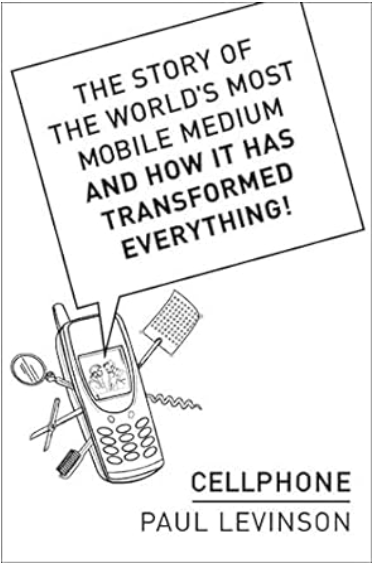
Cellphone, (2004), Paul Levinson

Currently on the reading pile, for some upcoming work, and this one is kinda interesting, especially coming at it in (early) 2024.

Because this book was published in 2004, twenty years ago, and the entire history of the smartphone hadn’t even happened yet.

This is a history of the cellphone, the ubiquitous pocket device, as it appeared in the era of Y2K and The Matrix movies. Of Nokia bricks, and flip phones and Razrs and maybe even a Blackberry or 3.

And it’s fascinating because of it.

I can’t go into too much detail about the current project, but the short version is that it’s about what changed with the arrival of the iPhone, and how our culture shifted.

But in order to figure that out, we need to know what it was like in the before times. And here Paul Levinson’s book does a wonderful job.

The most interesting part (for me) is Chapter 11, Future Calls, the speculative chapter about where the cellphone might be headed. But even in doing so, he shows how much of the current use of the phone showed up as early as 19`14, in various texts and comics, and it was only through some historical accidents that we didn’t get videophone development until much later. The picturephone has been floating around as an idea for nearly 100 years, even though now we take it for granted.

Much of the reason for the lack of development was the lack of interest: people couldn’t imagine them using it, and feared being seen on camera. It took half a century of television as passive entertainment, and the audience being accustomed to talking naturally on the phone to being comfortable with talking “face-to-face” as well.

So, I think this is a keeper, and I might have to track down a personal copy. This one was a serendipitous find at the local public library, and I grabbed a few others I’ll need to talk about soon too.


Levinson, P. (2004). Cellphone: The story of the world’s most mobile medium and how it has transformed everything! New York, N.Y. : Palgrave Macmillan.

Échanger

(This was originally released as Implausipod Episode 25, on January 2, 2024)

https://www.implausipod.com/1935232/14232183-implausipod-e0025-echanger

[buzzsprout episode=’14232183′ player=’true’]


Échanger

Bonjour. J’ai une question à vous poser. Voulez vous échanger avec moi? Really? Are you sure? That’s fantastic! Because sometimes the English language doesn’t have the right word that does exactly what you need it to do, that expresses the entirety of what you’re looking for. And in this case, that word, échanger, is what we’re going to use when we’re talking about automation.

I’ll explain more in this episode of The Implausipod.

Welcome to The Implausipod, a podcast about the intersection of art, technology, and popular culture. I’m your host, Dr. Implausible. And in this episode, we’re going to take a look at part three of our two part series on the sphere in Las Vegas. Yeah, things got out of hand. And follow through on an observation that dominated the discourse in 2023 and serves to be at the forefront of our discussion about technology in 2024 and beyond.

And that concept is échanger.

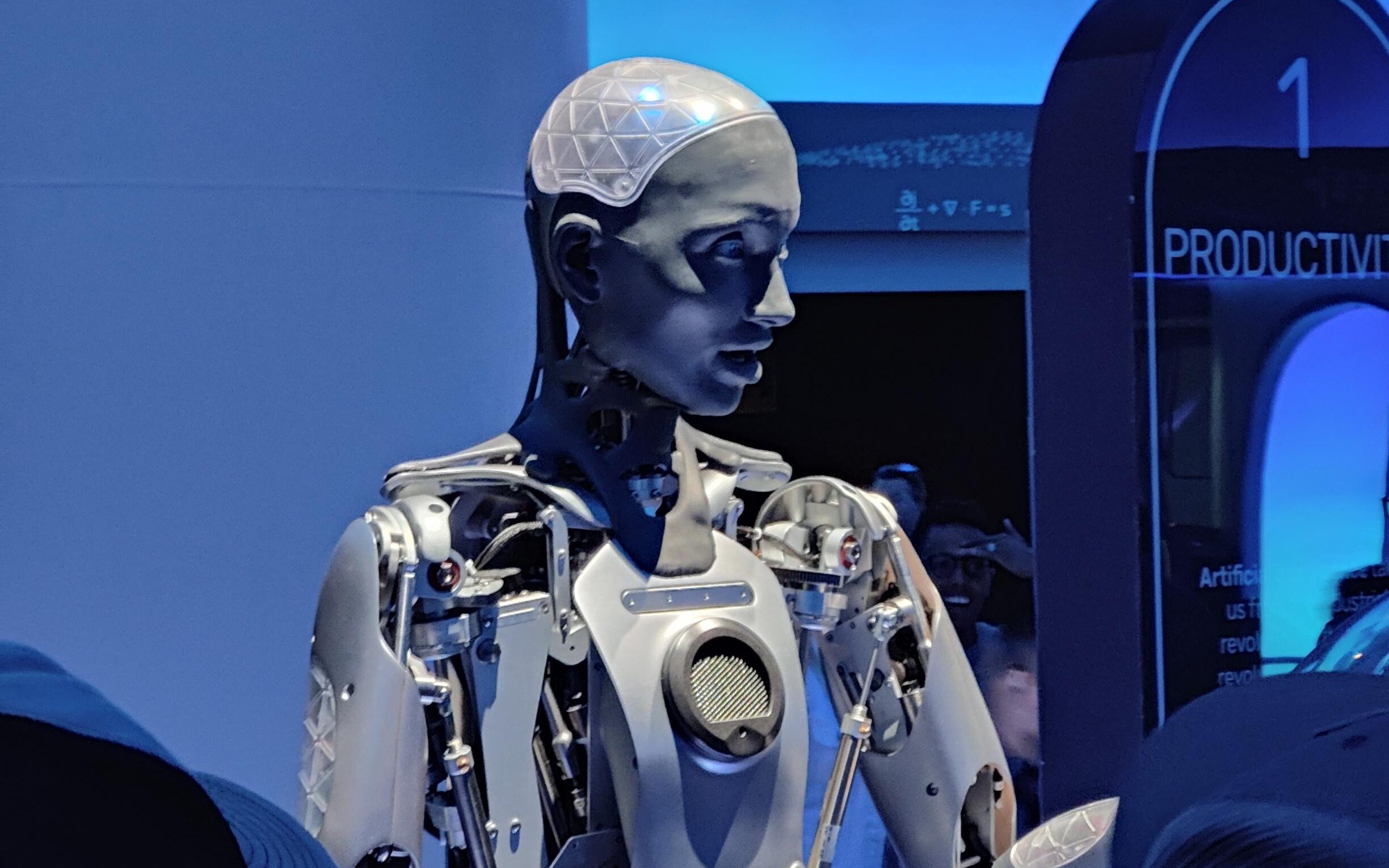
So I mentioned this the other episode when we were looking at the Sphere in Las Vegas and how it had a lot of workers that were doing fairly regular rote tasks, like holding up signs and directing traffic. And as they funneled everybody into the entrance of the Sphere, into the first floor of that massive auditorium, We met the robots, the auras, that were doing almost exactly the same thing:

responding to the crowd, answering questions of the audience, and directing them. But responding to them personally. And it struck me at the time, especially as we were kind of going through and looking at five different Auras, the sisters, that were explaining what we saw in each of these stations, that each of them could do the job of the others, their human chaperones, without too much more training.

It was job replacement made real. And this is where I started to look for a term that can kind of encompass that. Now, it’s something that’s been discussed a whole lot, that idea of job loss through automation, and it’s accelerated in the last year since the release of ChatGPT and the other AI assisted art tools or large language models, as people are worried that that’s going to directly lead to job loss.

But that’s only one part of the story, as there’s also things like the development of the Boston Dynamics robots, and other robotic assisted tools that are taking the roles of persons, and dogs, and mules within various environments. And so we have this assemblage of different things that are all connected to this job loss.

And in order to encompass these factors, I found myself stumbling for a word. I recalled back to some of my training in grad school where we were looking at the idea of actor network theory and the author Michael Callon. In 1986, he came up with the idea of interessement, And obviously he was French, but in his work titled Some Elements of the Sociology of Translation, he was talking about that shift that took place, and he was using the French language to describe it, a specific instance.

So I thought I’d reach out and draw on that inspiration, and see if perhaps a verb in French could encompass what we are seeing within the world at large. Hence, Échanger. And I like it. It works. I know there’s been some other authors who have used other verbs to describe different processes within the tech sphere lately, and sometimes those will get caught by language filters and sometimes they won’t, but I think Échanger, with all its multiplicity of meanings, adequately captures the breadth of what we’re looking for here when we’re talking about automation, agentrification via AI tools, and virtualization,

and what they might mean for workers that are working alongside machines that will replace them. That’s what the term means, or what it means now in the context of this episode, and in my reference to technological replacement. And speaking from a personal perspective, I have more than just an academic interest in echange.

I’ve been automated out of jobs on at least a couple different occasions over the last 30 years, and I’ve experienced outsourcing from a worker perspective on a couple occasions as well. And in some cases, both at the same time. For example, in one of those instances, I was working for a local tech company that was manufacturing phone handsets.

And there was seven people working on the assembly line, and after a few months, they brought in one machine that could replace the role of one of the persons on the line. And our duty was to feed material into the machine. And then after that was tested and worked out, within a month, they brought in another one.

And slowly, that team of seven was whittled down to two, as we’d just really need somebody at the front end to load the parts, and at the back end to take out the manufactured ones and test them. And it ran pretty much 24 7. And after they had fine tuned that, they packed up the whole factory and shipped it down to Mexico.

So we had both replacement, échanger, and outsourcing happening within the same instance. Now, obviously, this isn’t anything new, it’s been happening for years. The term technological unemployment was originally proposed by Keynes and included in his Essays in Persuasion from 1931, and has been returned to many times since, including by Nobel Prize winner Wassily Leontief in his paper titled Is Technological Unemployment Inevitable?

Daniel Suskind writes in his 2020 book, A World Without Work, that there can be two kinds of technological unemployment, frictional and structural. Frictional tech unemployment is that kind that is imposed by switching costs and not all workers being able to transition to the new jobs available in the changed economy.

The friction prevents the workers from moving as freely as needed. And this is what was happening in my experience with the jobs where échanger occurred. I want to be clear, a lot of those jobs that I was automated out of were not great. It was hard, demanding work, or physical work that was replaced by labor saving devices, in this case, machines.

But it still meant a job loss, and there was one less role, or entry level role, for a high school student, or college student, or casual worker, or whatever I was at the time.

Échanger. (part 2)

And that’s part of the problem. On March 27th, 2023, the Economics Research Department at Goldman Sachs released a report titled The Potentially Large Effects of Artificial Intelligence on Economic Growth, otherwise known as the Briggs-Kodnani Report. The report was published several months after the release of ChatGPT4 to the general public and captures the fear that was seen during its initial wave of use.

The report focuses on the economic impacts of generative AI and its ability to create content that is, quote, indistinguishable from human created outputs and breaks down communication barriers, end quote, and speculates what the macroeconomic effects of a large scale rollout of such technology would be.

Now, the authors state that this large scale introduction of AI tools would be, or Could be a significant disruption to the labor market. The authors take a look at occupational tasks on jobs, and using standard industry classifications, they find that approximately two thirds of current jobs are exposed to some degree of AI automation.

And the generated AI could, quote, substitute up to one fourth of current work. Now, if you take those estimates, like they did, it means it could expose something like 300 million full time jobs to automation through AI, or what I like to call agentrification. And that’s over a 10 year period. This would create an incredible amount of churn in the workforce, and whenever we hear about churn, we need to consider the human costs behind those terms.

A lot of people will lose their jobs, and well, the Schumpeterian creative destruction generally means that people get new jobs, or that old workers that haven’t moved become more productive, as a study by David Autor and others from 2022 found when they looked at U. S. census data from 1940 to 2018. and found that 60 percent of workers in 2018 were working at jobs that did not exist in 1940, and that most of this growth is fueled by technology driven job creation.

But there’s usually a lag between the two, between losing one job and having tech create new positions, the frictional tech unemployment we mentioned earlier. But there could also be more, the second kind mentioned above, structural technological unemployment. As stated by Briggs and Kodnani, there could very well be just some permanent job losses, and that can be a challenge for us to address as a society.

Now, with the productivity growth, Briggs and Kodnani argue we could see a 1. 5 percent growth over a 10 year period following widespread adoption, so the timing for all of this is actually quite distant. Everybody’s thinking everything’s going to end immediately, and that’s not necessarily the case. But it sure can feel like it’s coming around the corner right away.

The authors also estimated that GDP globally could increase by 7%, but that would depend on a whole lot of factors, so I’d like to bracket off that prediction, as there’s too many variables involved. The two things I really found interesting about their report was a, the timescale that they’re looking at this and B, the specific jobs that they’re looking at.

So, as I said, the ability to predict the specific GDP on something as large scale as this across the economy on a 10 year timeframe is just like, let’s not do that. It’s just. There, you can put numbers into it, but I think there’s just far too much speculation involved in actually being able to get to that level of precision with anything.

The interesting thing in the paper was their estimate of the work tasks that could be automated in the industries that could be more significantly affected. There’s two key charts for this. It’s Exhibit 5, which is the share of industry employment exposed to automation, and Exhibit 8, which is the share of industry employment by relative exposure to automation by AI.

And there’s some of these that are, you’re not going to see any automation improvements in. Some industries are just not really going to take a hit. But some of them could have AI as a complement, and some of them will have AI as a replacement. And this is in Exhibit 8, and I think this is probably the most interesting thing in the whole article.

The thing the Briggs and Kodnani report captures is a lot of the public’s initial impressions of OpenAI, and of ChatGPT as well. This drove some of the furor because as people were able to access the tool and use it, one of the things they’d naturally do is go, Well, does this help me? Can I use this for my own job?

And B, how well does this do my own job? So a lot of the initial uproar and the impacts from ChatGPT was people using it to see how it would do their job and being concerned with what they saw. So I think a lot of their concerns and fears are well founded. If you’re doing basic coding tasks, and the tool is able to replicate some of those tasks fairly simply, you’re like, oh my god, what’s going on?

If you’re doing copywriting or any of those roles that receive a significant amount of replacement, as in the Table 8 on the Report, like office and administrative support, and legal, you know, traditionally one of those things we didn’t really think would be automated, you’re going to have some serious concerns.

Martin Ford’s book, The Rise of the Robot, talks about that white collar replacement, where we’re seeing job loss and automation in roles that traditionally hadn’t seen it before. When we think of échanger. When we think of automation, we think of it as, like, large industrial machinery. We’re thinking of things like factory machines, being able to produce something that a craftsman might have had to work at for long hours, but able to do that at an industrial scale

or rapid scale. And this change has us going all the way back to the era of the Luddites in the early industrial revolution in England. Now, when ChatGPT launched, we’re starting to see the process of what I like to call agentrification, tech replacement through AI tools. And basically, we’re having automation of white collar work in things like the legal field.

I mean, this might fly under the radar for a lot of academic analysis, but if you’re paying attention to what gets advertised, there were signs. Tools like LegalZoom were continually advertised on the Jim Rome sports talk show over a decade ago, and we note that being able to be centralized and outsourcing that work would indicate that there’s, you know, some risks of échanger involved in those particular fields.

Now, there’s other fields where this white collar work is at the risk of echangér as well. The Hollywood Strikes of 2023 had similar motivations. Though their industries were moving quicker to roll out the tools, being on the forefront of their use, the Actors Guild and the Writers Guild were much more proactive against the tools because they saw the role that would take place in their replacement.

Given the role of the cultural industries, like movie production, being at the leading edge of soft innovation, we were already seeing digital de-aging tech and reinsertion in major motion pictures, notably from Disney properties like Star Wars with both Peter Cushing and Carrie Fisher, whose likenesses were used in films after they had passed away, and the de aging of Harrison Ford in Indiana Jones 5.

This leads to an interesting question. Can Échanger lead to a replacement of you with your younger self? I don’t know. Let’s explore that a bit more, next.

Échanger (part 3)

On December 2nd, 2023, the rock band KISS played their final show at Madison Square Gardens. Now, this may have not been newsworthy, as they had been doing Last show ever since late last century, but as the members were now in their 70s, there was a feeling that they really meant it this time. However, at the end of the show, they revealed that they weren’t quite done just yet, and they unveiled their quote unquote immortal digital avatars that will represent the band on stage in the future.

Now, KISS aren’t the first in doing this by any means. The Swedish pop band ABBA has been doing this for a while, and Kiss contacted the same company, Pop House Entertainment, to work on their avatars. Now, Bloomberg News reports that the ABBA shows are pulling in 2 million a week. Yes, you heard that correctly.

Clearly, I’m in the wrong business. But this trend to virtual entertainers has been happening for a while. When a hologram Tupac appeared with Snoop Dogg and Dr. Dre at Coachella in 2012, it was something that had already been in the works. Bands like Gorillaz and Death Clock had long used virtual or animated avatars, and within countries like South Korea, virtual avatars are growing in popularity as well, like M.A.V.E., the four member virtual K pop group that’s been moving up the charts in 2023. We noted a few episodes ago that one of the challenges for 21st century entertainment complexes like the Sphere is providing enough continuous content, and virtualized groups like this may well be able to fill that role and allow the Sphere to provide content worldwide by having virtual avatars that can fill the entire space in ways that Bono and the Edge on a small stage in front of a massive screen can’t quite do. And more than just this, the shift to remote that’s happened as part of the pandemic response could mean this technology could be rolled out in education and other fields as well.

So we’re just seeing the thin edge of the wedge of this virtualization component of Échanger. With large companies like Apple and Meta continually pushing the Metaverse, we’re going to see more and more of it in the coming years. So 2024 may well be the year of virtualization. We’ll dive further into virtualization and the Metaverse in upcoming weeks here on the Implausipod.

Why échanger? (part 4)

Well, basically it covers three things. We’ve kind of discovered it covers automation, which is the industrial process that we’ve been seeing for centuries now. It covers virtualization, the shift to digital in entertainment, education, conferences, and distribution. And the third thing it covers is agentrification, the replacement of workers or roles or jobs by AI.

So, this is different than outsourcing, as outsourcing may work in conjunction with some of the above, as noted in my own personal experience earlier, and these are all metaprocesses of the trends towards technological unemployment. If we look at any of these, automation, Virtualization and agentification, they’re all metaprocesses of translation.

Now, the work I mentioned earlier by Michel Callon, in Some Elements Towards the Sociology of Translation from 1986, is basically talking about that, describing what we call a flat ontology. An ontology, in this case, is a way of describing the world. And what a flat ontology does is it treats the actors in the world as similar.

So, normally, when we talk about an ontology, we’re talking about like with like, right? We’re talking about people, or we’re talking about things, or we’re talking about institutions, firms, we’re looking at things on the same level. When we flatten the ontology, we treat all the actors or agents in the system equally, and we can look at the power relations between them.

We use the same terms for the actors, so in this case, it would mean human and non human actors are treated in the same way. We treat the things the same as the people. That doesn’t necessarily mean we treat the people as things, but we say that everything here has to be described with the same terms when it comes to their agency.

This is what interessment means. That’s the agency. In between state, the interposition, when Michel Callon is talking about translation between asymmetrical actors, it’s that moment where we connect dissimilar things. And so this is where we come into the idea of échanger as a metaprocess for these three trends of replacement.

And that’s why we chose échanger for this process of translation as well. Échanger is a process of translation of a different kind. Échanger is the metaprocess of having something different do the job or being a replacement for the task. So if échanger means in French, literally a trade and exchange, a swap, then we’re extending or exapting the term a little bit in this case, where to us échanger means replacement in place.

So if we return to our example from the Sphere in Las Vegas, we can see this happening with the Auras and the workers. The role is similar, but it’s a different agent, different actor that is taking that place. This is what we see with virtualization as well, or automation, the agentrification that’s taking place due to AI.

And sometimes those machines, those tools, those devices, means the job of many can be done by one. But it also means that the one still occupies the same place within the network of tasks and associations within the process around it. Think of those machines embedded in the assembly line I mentioned earlier.

Where the staff went down from 7 to 2 and the production line was turned into a black box with inputs and outputs. But what’s actually going on in that black box? We can have some questions. With some automated processes, we can tell. But with AI tools, we don’t necessarily know. And that can be a significant problem. Especially when we’re facing Échanger.


Bibliography:

Autor, D., Chin, C., Salomons, A. M., & Seegmiller, B. (2022). New Frontiers: The Origins and Content of New Work, 1940–2018 (Working Paper 30389). National Bureau of Economic Research. https://doi.org/10.3386/w30389

Hatzius, J. et al. (2023)The Potentially Large Effects of Artificial Intelligence on Economic Growth . (Briggs/Kodnani). Retrieved December 5, 2023, 

Ford, M. (2016). The Rise of the Robots: Technology and the Threat of Mass Unemployment. Oneworld Publications.

Leontief, W. (1979). Is Technological Unemployment Inevitable? Challenge, 22(4), 48–50.

Susskind, D. (2020). A World Without Work: Technology, Automation, and How We Should Respond. Metropolitan Books.

They’re not human? AI-powered K-pop girl group Mave: eye global success. (2023, March 17). South China Morning Post.

Tupac Coachella hologram: Behind the technology – CBS News. (2012, November 9).